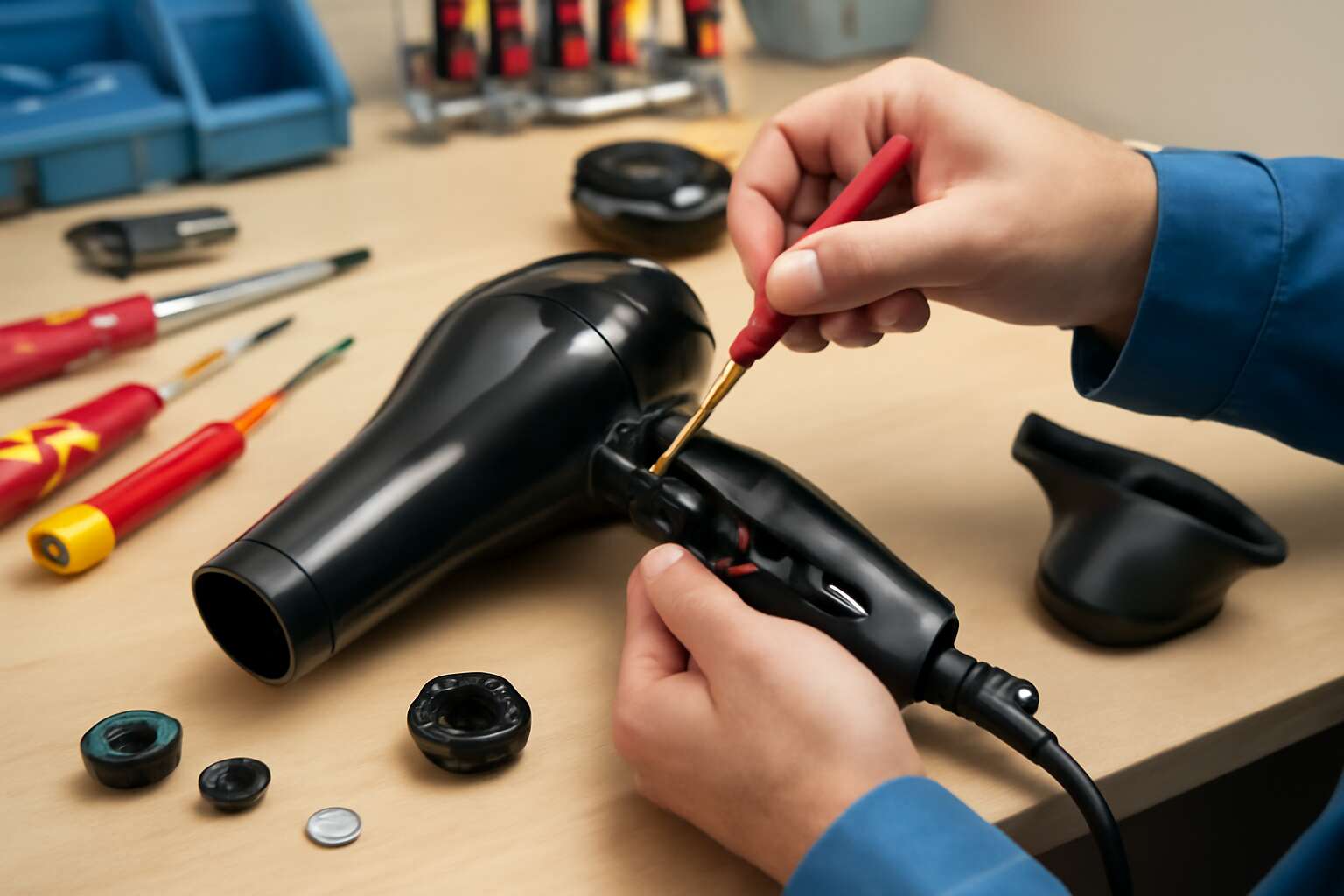
Comprehensive Overview of Salon Equipment Maintenance and Repair
Common Types of Salon Equipment Requiring Repair
Dark corridors of a bustling salon conceal a quiet truth: well-maintained equipment hums like a patient heart and stays reliable through the night. In South Africa, data suggests up to 60% of downtime stems from neglect rather than misfortune. True care begins with disciplined, proactive attention to every machine—salon equipment repair starts here. I have watched panels glow with lasting life when tended, and crumble when neglected.
A practical maintenance rhythm keeps the shadows at bay:
- Daily wipe-downs and sanitizing surfaces
- Weekly checks of cords, hoses, seals, wheels
- Monthly calibration of temps, voltages, timers
- Quarterly servicing for steamers, backwash, dryers
Common types nod toward the quiet theater of the repair shop: high-frequency hair dryers that fade, hydraulic chairs that sag, steamers that leak, and compact sterilizers that misbehave. Each fault tells a gothic tale of power and service.
Why Timely Repairs Save Money
In South Africa, downtime costs more than you expect—up to 60% stems from neglect rather than fate. A comprehensive view of salon equipment maintenance shows that timely care keeps machines singing, staff calm, and budgets intact. Salon equipment repair becomes a daily discipline that guards the heartbeat of a busy salon—it’s a quiet truth.
Treat each device as part of a living system; the better you listen, the longer it serves. The payoff isn’t flashy, but it is real!
- Higher uptime and a consistent client experience
- Lower total cost of ownership over time
- Enhanced safety and regulatory compliance for staff and guests
This approach is a cornerstone of maintenance: care today prevents chaos tomorrow, and that quiet arithmetic matters in every chair.
Key Tools and Diagnostics Used by Technicians
In South Africa, downtime costs more than you think—up to 60% stems from neglect. A clear-eyed view of maintenance shows that the right diagnostic stance turns panic response into a daily discipline. Tools, training, and listening to machines blend into a sober, unglamorous craft.
Key tools and diagnostics form a language technicians speak fluently, powering salon equipment repair.
- Digital multimeter for voltage, current, and continuity checks
- Thermal imaging camera to spot hotspots and insulation faults
- Refrigerant leak detector and vacuum gauge for cooling systems
Beyond gadgets, routine checks of firmware, calibration, and sensor readings keep performance predictable. Vibration analysis catches bearing wear in compact motors; borescopes peek into tight pathways; and sound and airflow measurements reveal hidden blockages. This is quiet expertise rather than drama!
Safety Standards and Certifications in Salon Repair
In the hush between appointments, safety dances with metal and glass. In South Africa, the framework that governs salon equipment repair is not mere bureaucracy; it is a compass that keeps bearings true, turning potential hazards into predictable routines. This is the backbone of the craft, where every check and seal is a vow to reliability.
Key safety standards and certifications anchor the practice:
- Electrical safety compliance under South African standards such as SANS 10142-1
- OHSA-aligned risk assessment and lockout-tagout procedures to protect technicians
- Safe refrigerant handling and environmentally sound disposal per regulatory guidelines
These norms illuminate the path from repair to spectacle-free service, ensuring that every repair job upholds performance, safety, and professional trust.
Choosing a Reputable Repair Service
In the hush between appointments, endurance becomes elegance. A seasoned technician once said that machinery mirrors the salon: when it hums smoothly, beauty flows without fanfare. For South African studios, choosing the right partner for salon equipment repair is not a luxury but a quiet oath to reliability, turning fragile moments into predictable, splendid service.
- Access to genuine parts and manufacturer warranties
- Transparent turnaround times and clear pricing
- Licensed technicians with local compliance knowledge
Seek a repair service that speaks plainly, honors timelines, and restores confidence with every visit. The right partner treats salon equipment repair as craftsmanship, not a band-aid, returning your machines to their prime so clients notice only the glow of your work.
Major Categories of Salon Equipment and Their Service Needs
Hair Dryers, Heat Tools, and Safety Considerations
In the dim glow of a bustling South African salon, the truth is stark: behind every flawless finish lies equipment that must be tended, or the spell will falter. Major categories—Hair Dryers, Heat Tools, and their safety systems—define performance and the cadence of salon equipment repair.
Consider these pillars of reliability.
- Hair Dryers — deliver steady heat while guarding against overheating, with clean vents and intact thermal cutoffs.
- Heat Tools — curling irons and straighteners with correct temperature limits, ceramic coatings, and smooth sheathing.
- Safety Systems — properly grounded outlets, GFCI protection, fuses, and automatic shut-offs that trigger before damage spreads.
Maintenance must address voltage fluctuations, lint buildup, and worn connectors, all within the frame of South Africa’s safety standards. In salon equipment repair, meticulous testing and precise parts selection save downtime and protect both clients and staff.
Salon Chairs, Hydraulic Systems, and Bases
Nearly 40% of downtime in busy South African salons traces to worn chairs, failing hydraulic lifts, and unstable bases. Three pillars keep the workflow seamless: Salon Chairs, Hydraulic Systems, and Bases. Each demands attentive service—plush upholstery, reliable gas springs, and a perfectly level pedestal. For salon equipment repair, understanding these needs turns potential failures into smooth performance rather than costly interruptions.
To keep them in peak condition, focus on these service needs:
- Salon Chairs — upholstery wear, cushion firmness, and swivel consistency
- Hydraulic Systems — seals, oil levels, and smooth, controlled lifting
- Bases — level alignment, anti-tip hardware, and mounting integrity
In the world of salon equipment repair, precision matters. When these components align, the customer experience stays flawless and the shop runs like a well-oiled machine. The result is reliability that turns busy days into performances, not interruptions!
Trolleys, Cabinets, and Station Furniture
In South Africa’s busiest salons, the quiet reliability of trolleys, cabinets, and station furniture can mean the difference between a flawless service and a stalled lineup. “Polished surfaces invite confident service,” a veteran technician once told me, and the right pieces quietly support every appointment.
- Trolleys — mobility, locking drawers, corrosion resistance
- Cabinets — door alignment, soft-close hardware, rust prevention
- Station furniture — surface durability, cable management, ergonomic spacing
These major categories demand attentive service in salon equipment repair: ensure trolleys glide smoothly, cabinets stay aligned, and station furniture remains level and cable-smart. When maintenance is proactive, downtime shrinks and the customer experience stays flawless. This is the heartbeat of salon equipment repair.
Electrical Components in Salon Equipment
In South Africa’s busiest salons, power is the quiet conductor behind every flawless service. A single loose connection can ripple through a day, turning a streamlined appointment into a pause in the cadence. “Reliable power is the unsung partner of every appointment,” a veteran technician reminds, and salon equipment repair hinges on that truth.
Major categories in this realm are anchored by electrical components that drive performance and safety. Service needs include regular inspection, moisture protection, and careful calibration:
- Power distribution and switches
- Wiring harnesses and insulation
- Circuit boards and controllers
- Safety devices and relays
These elements demand periodic diagnostics, corrosion prevention, and secure cable management to sustain peak uptime. Within salon equipment repair, attention to electrical components preserves the choreography of the chair, cape, and client experience.
Backbar Refrigeration and Storage Equipment Maintenance
In the busy day-to-day hum of South Africa’s busiest salons, backbar refrigeration and storage equipment act as quiet sentinels. In salon equipment repair, these systems safeguard product integrity, staff workflows, and client comfort, often without fanfare. Regular oversight keeps temperatures stable and condensation at bay.
- Backbar refrigeration units: thermostat accuracy, door seals, condensate drainage, and coil cleanliness
- Storage cabinets and shelving: rust prevention, gasket integrity, and secure organization
- Humidity monitors and climate controls: calibration and alarm reliability
When these elements operate in concert, the day’s choreography remains uninterrupted, and the salon breathes a little easier.
Diagnostics and Troubleshooting for Salon Tools and Machines
Common Fault Symptoms and Quick Checks
Salons in SA lose up to 30% of peak service time to unseen equipment faults. Diagnostics and Troubleshooting for salon tools and machines reveal faults before they disrupt flow, saving chair time and money. A pattern-based approach turns a vague hum into a confident fix.
Common fault symptoms give the diagnostic map.
- Overheating or sudden shutdowns
- Inconsistent power or motor failure
- Unusual noises, smells, or vibrations
- Display error codes or warning lights on displays
These symptoms guide where attention should fall, informing whether the issue warrants salon equipment repair or a professional diagnostic.
Quick checks rely on non-invasive observations: look for power indicators, listen for unusual noises, note any abnormal smells or vibrations, and verify that controls respond.
Electrical and Fuse Troubleshooting
Across South Africa, salons lose up to 30% of peak service time to unseen equipment faults. Diagnostics and troubleshooting for salon tools and machines rely on pattern recognition that turns a faint hum into a confident fix. In salon equipment repair, electrical and fuse troubleshooting demands attention to how power travels, how protective devices sit in the circuit, and how displays signal status.
Seasoned technicians map circuits, interpret fault codes, and assess interlocks without guesswork. A diagnostic lens stays patient, reading voltage quirks, start-up surges, and control responses that reveal the heart of the problem.
- Electrical integrity and wiring health
- Protection devices: fuses and circuit breakers
- Control logic and interlocks that govern safe operation
With this pattern-based approach, technicians decide whether a fault belongs in repair or requires a deeper diagnostic, preserving chair time, revenue, and the elegance of the salon.
Thermal Cutoffs and Overheating Issues
Across SA salons, up to 30% of peak service time is eaten by unseen faults. Heat is the quiet disruptor in these spaces. In salon equipment repair, diagnosing thermal cutoffs and overheating is a pattern game—reading start-up surges, fan timing, and how controls respond as heat climbs. Thermal cutoffs act as safety gatekeepers; when temperatures spike, they slam the circuit shut, protecting clients and the chair during back-to-back service slots.
- Unusual warmth around vents or housing
- Sudden fan acceleration or failure to cool
- Frequent trips of fuses or circuit breakers
- Control panel lag or erratic temperature readings
These cues steer technicians toward whether a unit needs a thermal cutoff replacement or deeper diagnostic work, keeping the salon’s flow uninterrupted and revenue intact.
Noise, Vibration, and Mechanical Wear Diagnosis
Within the salon’s quiet hours, a stubborn clink can betray a brewing fault. Noise is rarely random; it threads through the day as a warning sign. In salon equipment repair, diagnosing noise, vibration, and mechanical wear reveals hidden stresses and the ghostly arithmetic behind a machine that keeps service moving.
- Unusual noises: grinding, rattling, or a chorus of creaks as tools move
- Vibration felt through mounts, cabinets, or the floor, intensifying with cycles
- Mechanical play or wobble in bearings, belts, pulleys, or fans
- Signs of wear in gears, couplings, or mounts that drift out of alignment
Recognizing these cues in salon equipment repair guides technicians toward patterns rather than problems, preserving the rhythm of the space and the night’s revenue.
Software and Control Panel Diagnostics
Salons run on a quiet orchestra of software and panels; a single glitch can ruin the set. In Diagnostics and Troubleshooting for Salon Tools and Machines Software and Control Panel Diagnostics, insight arrives as a string of error codes, sensor readouts, and calibration nudges. Those hints, read with patience, map a path from hesitation to harmony. When a control panel misreads a heat sensor or loses a network handshake, service pauses. This is where salon equipment repair begins, with methodical checks that restore rhythm and revenue.
Several diagnostic steps translate complexity into action:
- Display error codes and historical readings as clues
- Self-test and calibration routines as diagnostic anchors
- Firmware version and network status as compatibility indicators
Patience, precision, and a clear code map keep the showroom humming.
Repair Best Practices and Replacement Decisions
Assessing Cost vs. Replacement
Repair best practices start with a disciplined fault-tracking routine: document symptoms, run targeted tests, and validate fixes before the equipment returns to service. A clean diagnostic trail eliminates guesswork and curbs downtime—fact: salons that track faults cut average repair time by 30%. That saving translates to hundreds of rands per week on a busy floor.
To keep repairs efficient and transparent, adopt a quick, repeatable checklist:
- Confirm root cause with staged testing
- Estimate total repair cost, spare parts, and labor
- Plan downtime to minimize impact on client flow
Replacement decisions come down to total cost of ownership and risk. If repair bills climb, or critical components become scarce, replacement often pays for itself through reduced downtime and energy savings. When framed this way, salons win by protecting uptime, reputation, and margins; this is especially true in the realm of salon equipment repair.
Repair Process Flow: From Diagnosis to Repair
A strong diagnostic trail is more than a checklist; it’s a heartbeat for a busy salon floor. In South Africa, salons that track faults in salon equipment repair cut average downtime by 30%, turning reactive fixes into reliable service. The return is measured in uptime, client trust, and steady margins.
- Diagnosis and symptom capture
- Staged testing to confirm root cause
- Cost, spare parts, and labour estimation
- Downtime planning to minimize client disruption
- Replacement decision when total cost or risk favours it
When framed this way, the model protects uptime and reputation on a salon floor where every minute counts.
Warranty, Insurance, and Service Agreements
In salon equipment repair, uptime is currency. A disciplined approach to warranties and service plans pays off on a busy floor. In South Africa, structured repair workflows shave downtime and shield margins—up to 30% in some salons!
Replacement decisions should weigh total cost, risk, and downtime against ongoing service quality. When a fix drags on or parts prove scarce, a timely replacement protects client trust and long-term profitability.
Warranty, insurance, and service agreements are guard rails, not afterthoughts.
- Warranty terms: duration, parts, labour coverage
- Insurance alignment: theft, accidental damage, transit
- Service levels: response times and on-site support
- End-of-life and replacement options within the plan
Safety Protocols During Repair
In the rhythm of a bustling salon, downtime devours profit. In the world of salon equipment repair, disciplined workflows safeguard uptime and client trust.
Safety protocols during repair start with power isolation and PPE, moving through a tested sequence that keeps technicians and clients unscathed.
- Power isolation and de-energization
- Correct PPE and insulated tools
- Post-repair testing and documentation
When a fix drags on or parts prove scarce, a timely replacement protects client trust and long-term profitability.
This measured approach—balancing repair best practices with prudent replacement—shapes how floors perform in high-volume salons across South Africa.
Preventive Maintenance Scheduling
Downtime in a bustling salon wears the crown of expense. In the world of salon equipment repair, best practices act as a steady beat guiding technicians through diagnosis, testing, and safe reassembly. A disciplined, well-documented workflow keeps service bays calm and clients confident, even when the clock ticks loudest.
Within this measured framework, three pillars guide repair best practices and prudent replacement decisions:
- Predictive maintenance aligned with usage patterns
- Standardized repair sequences and meticulous documentation
- Replacement triggers based on cost/value comparisons
Preventive maintenance scheduling becomes a quiet cadence of care, lengthening lifecycles and preserving margins. For salon equipment repair, this cadence binds usage data, service histories, and expectations into a reliable hum beneath the day’s clamor.
SEO and Content Strategies for Repair Services in Salons
Keyword Research for Local SEO
Salons hum with the bustle of service, until a critical machine sighs and the chair becomes a prop in a stalled day. A South African study notes downtime can cost a busy shop thousands in lost minutes. In this quiet battlefield, salon equipment repair and SEO work hand in hand, guiding clients to the right fix—fast. “Maintenance is profit in disguise,” remarks a seasoned industry veteran.
Smart SEO and content strategies for repair services in salons hinge on local visibility and trust. Create content that answers real questions and threads in the keyword naturally, without shouting. To reinforce the approach, consider:
- Local presence that shows in maps and reviews
- Clear, value-first service pages for common gear
- Testimonials from salon owners and technicians
South Africa’s market rewards authenticity and speed. A patient, investigative tone—mixed with warmth—helps repair stories land and turn inquiries into partnerships.
Content Ideas: How-To Guides and Maintenance Tips
A South African study notes downtime can cost a busy salon thousands in lost minutes. In this quiet battlefield, SEO for repair services in salons guides clients to the right fix—fast; salon equipment repair is visibility plus care.
Local presence shines in maps and reviews, while value-first service pages earn trust. Testimonials from salon owners and technicians turn inquiries into partnerships, proving reliability translates into online recommendations and steady foot traffic.
Content ideas guide the balance between information and warmth.
- How-To Guides and Maintenance Tips for salon equipment repair
- Practical troubleshooting and quick checks that prevent downtime
- Owner stories and technician insights to build trust
South Africa rewards authenticity and speed; a patient, investigative tone—mixed with warmth—lands repair stories and partnerships.
Building Trust with Case Studies and Certifications
A busy South African salon clocks time in minutes; a single outage can cost thousands. That’s why salon equipment repair is more than a service—it’s a trust-building backbone that keeps doors open and clients smiling. Smart SEO and content strategies help you show real results fast.
We lean on case studies and certifications to demonstrate reliability; authentic voices from salon owners and technicians can turn inquiries into partnerships.
- Case studies with measurable uptime improvements
- Certifications and warranties that ensure quality
- Testimonials from local salons that translate to loyalty
Together, these elements shape content that is both informative and warmly human, attracting the right clients while anchoring your brand in the community.
On-Page SEO Best Practices for Service Pages
In a Cape Town salon, a five-minute outage can drain thousands in revenue, turning busy chairs into paused moments and muted smiles. This is why salon equipment repair pages must speak to both the clock and the heart—clear, compelling, and SEO-savvy.
On-page SEO best practices for service pages blend practical signals with human warmth. Use descriptive headings, native language for locals, and fast-loading layouts. Consider FAQs, schema markup, and mobile-first design to help engines understand service intent.
- Clear, benefit-led headings and meta descriptions
- Local keywords and city pages
- FAQ schema and structured data
- Fast load times and mobile responsiveness
- Accessible, image-rich content with alt text
That clarity turns inquiries into partnerships, because even a single line of human copy can outpace a spec sheet. For clients, that translates into reliable salon equipment repair.
Technical SEO Considerations for Repair Shops
Across South Africa, a five-minute outage in a busy salon can drain thousands in peak hour revenue. That clock-heart reality demands copy that moves as quickly as circuits: clear, credible, and SEO-savvy for salon equipment repair. The best pages blend precision with warmth, guiding readers toward trust without jargon, while layouts stay fast and mobile-ready to meet local searchers where they are.
Key content pillars include:
- Local keyword strategy and city pages
- Clear service descriptions aligned with reader intent
- Fast, mobile-friendly media and structured data
A well-planned approach to salon equipment repair merges local intent with fast-loading formats, turning curiosity into confidence and keeping revenue resilient during busy hours.

0 Comments